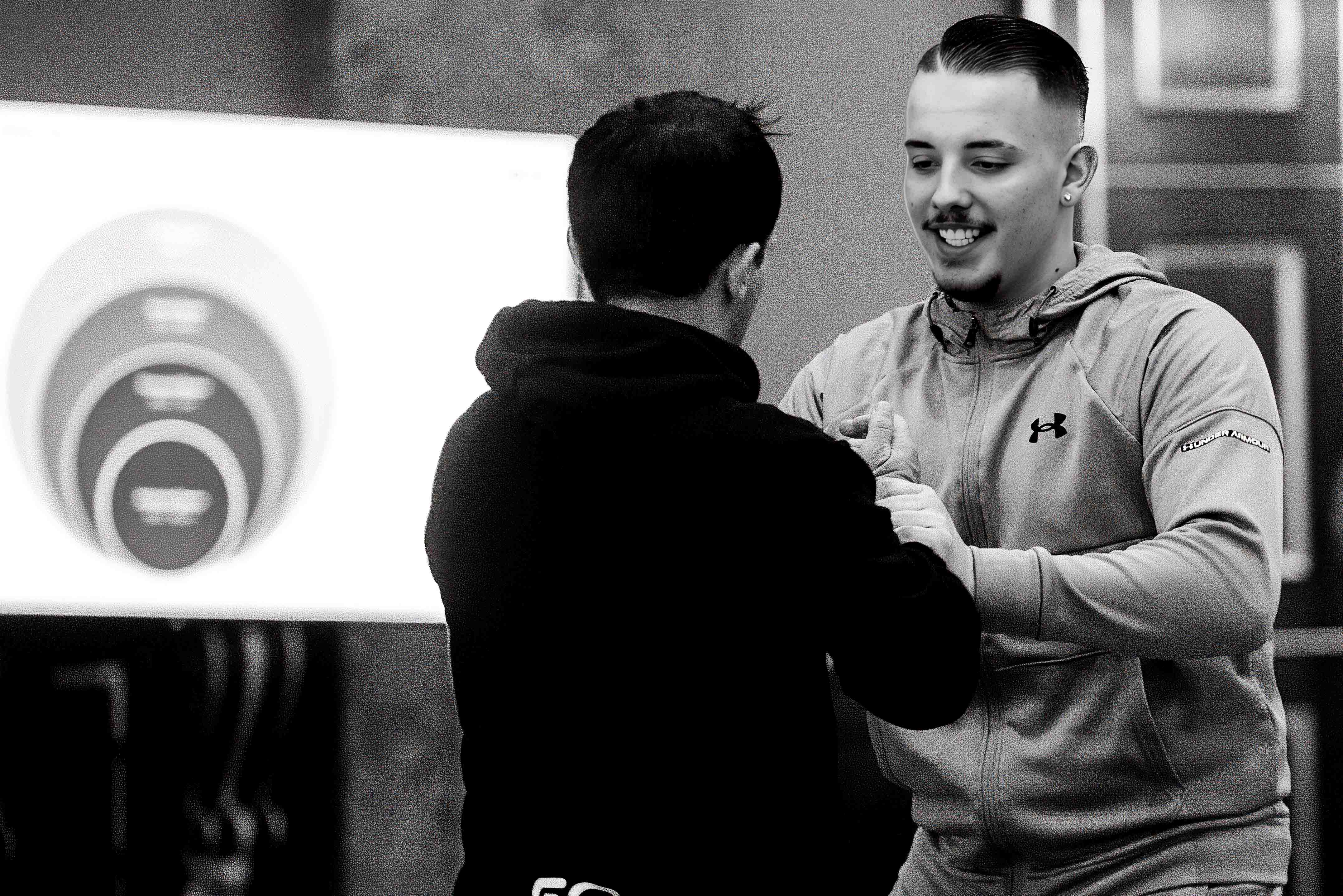
I was running a de-escalation session for retail staff recently. With the January sales in full flow, the timing felt apt – queues are longer, patience is shorter and staff take the brunt of it. I asked a simple question: “When things start to go wrong, what do you need to be most aware of?” I expected the usual answers. Body language. Tone. The customer who’s had a bad day and wants a target. Instead, one woman said, without hesitation: “My manager. ”It got a laugh – the kind you hear when something lands because it’s true. But she wasn’t joking.

And in five minutes she’d said something that applies well beyond retail – hospitality, healthcare reception, call centres, transport, security, anywhere the public has access to staff.
Frontline safety isn’t just about handling difficult people.
It’s also about knowing your organisation will back you when you draw a line.
Two calculations, one moment
When someone kicks off, staff are doing two calculations at once.
The first is physical:
Is this person escalating?
The second is organisational:
If I say “no” here, what happens to me afterwards?
That second question changes everything.
If you believe you’ll be backed, you can stay calm, be clear and enforce a standard.
If you believe you’ll be second-guessed, you do what unsupported people always do:
You accommodate. You placate. You absorb behaviour you shouldn’t have to absorb.
Not because you think the customer is right.
Because you’re managing risk on both sides of the counter.
“Use your judgement” is not a policy
Managers often think they’re empowering staff when they say, “Use your judgement.”
What many staff hear is, “You’re on your own.”
Because what does “good judgement” mean when the consequences are inconsistent?
One manager backs you for refusing service.
Another tells you you’ve overreacted.
A third apologises to the customer and offers a discount – right in front of you – to “keep the peace”.
That’s when staff learn the real rule:
The customer who causes the most hassle gets rewarded.
And once that happens, bad behaviour stops being an exception.
It becomes a tactic.
Training helps. Ambiguity breaks it.
De-escalation training matters.
It helps people control their tone, create space, reduce friction and spot escalation early.
But it can’t fix a workplace that won’t define the line.
If the unofficial goal is “avoid complaints at all costs”, staff will tolerate behaviour that should never be tolerated.
And calling that “customer service” is just a polite way of saying:
“Take it.”
Clarity is protection
This isn’t about giving staff licence to do whatever they like.
It’s about giving them enough clarity that they can act early, consistently and safely.
- What behaviour is unacceptable?
- What do staff do in the moment?
- When do they step away?
- When do they call for support?
- What happens next, every time?
That last one is the difference between a policy and a poster.
A written policy is helpful.
A consistently backed policy is protection.
Not because it’s fair.
Because it’s real.
A question for leaders
If someone on your team refuses service to an abusive customer today, do they know you’ll back them?
Or do they expect you’ll override them, apologise and offer a discount?
Because if it’s the second one, the most dangerous conversation in your organisation isn’t with the public.
It’s the one your staff are having in their head:
“How much am I expected to take?”
It’s one reason we’ve started spending as much time aligning managers on boundaries and escalation as we do teaching frontline staff what to say.


Ready to equip yourself and your staff with essential self-defence skills, including effective de-escalation techniques?